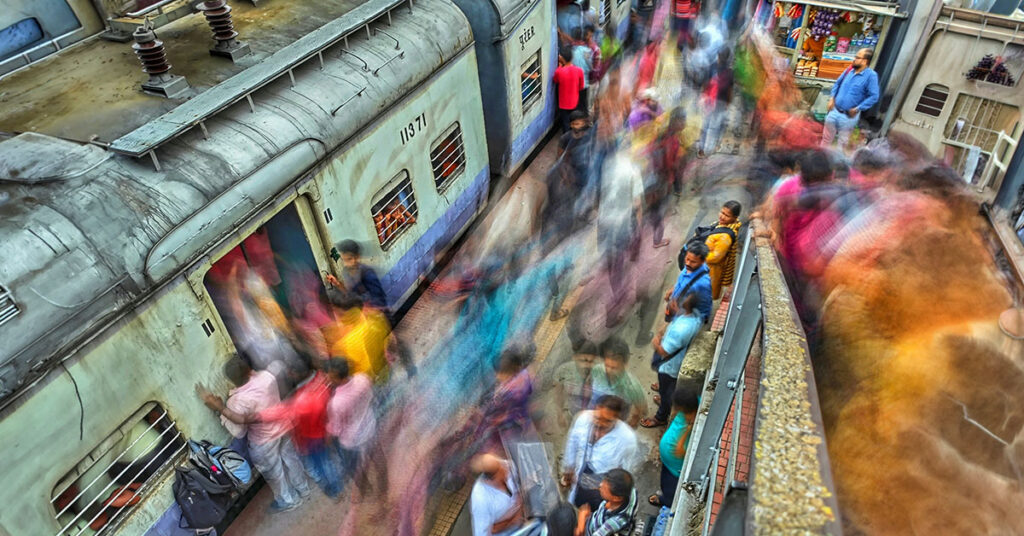

Whenever I hear the word Falakata, two things quietly return to my heart: a beautiful Christian environment and people who are simple, joyful, and deeply loving. I have only been there two or three times during my years in India, yet there has always been a strange sense of belonging. The Raymond Adventist campus, surrounded by Adventist families and faith-filled lives, carries a warmth that stays with you long after you leave.
The Journey That Broke My Comfort
The trip to Falakata was unexpected, exhausting, dirty, chaotic, thrilling in the worst way, and honestly, I hated that journey. Two and a half days on a train that tested everything in me—my patience, my leadership, and even my faith.
But somewhere in that discomfort, I met God in a way I never expected. That was 2015, while I was with Laymen Ministries and Hope Channel India, I received a call from my director. He asked me to take my team from Chennai to the Raymond Adventist campus in Falakata for a series of meetings that needed to be filmed and later broadcast. Our studio and base were in Chennai, and Falakata sits far away in West Bengal, almost at the opposite end of the country. India is vast, and travel options exist: buses, flights, and trains. Flights were far beyond our budget, so the only possible option was the train. A train journey to West Bengal meant two and a half days of travel.
Knowing what lay ahead, I requested my director to at least book us in third AC. We were carrying equipment worth several million, cameras, audio gear, and production tools. Sleeper class would be risky, uncomfortable, and unsafe. But there was no budget. The decision was final. Sleeper class it was. The responsibility fell squarely on me. Leading the team, protecting the equipment, and ensuring we reached safely was no small burden. This project mattered because we were trying to build a sustainable business model for our work, something that could support the institution during difficult seasons. My team was unhappy. I could see it in their faces, and truthfully, I felt the same. Still, we agreed to go.
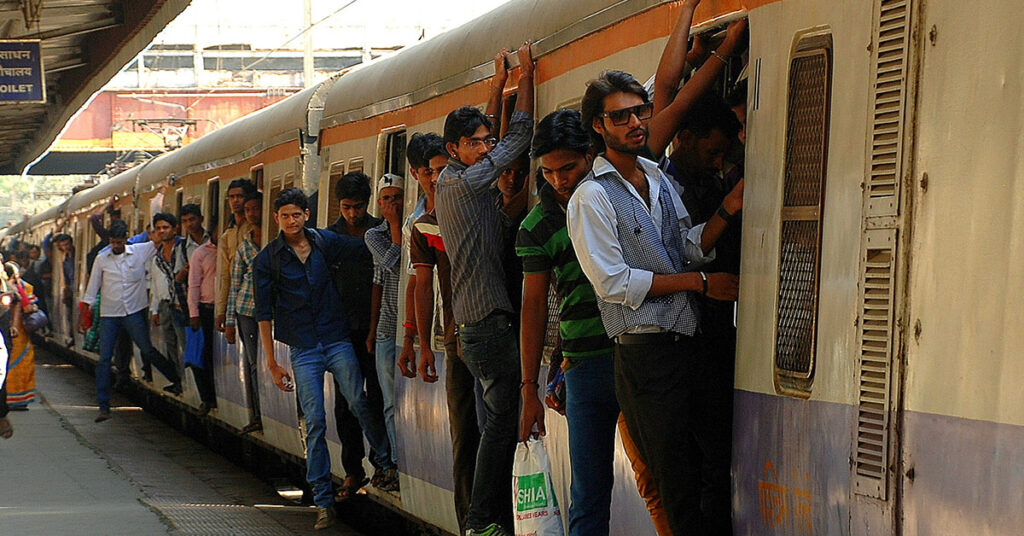
An image of a half-filled yet crowded train traveling to another state or province. It usually becomes even more crowded along the way.
Travelling on a public train with equipment worth millions is not easy. Every moment carries tension. If anything went missing, the scrutiny would be severe, especially within a close Adventist community. The weight of that responsibility sat heavily on my chest. We packed the equipment in plain suitcases, nothing attractive, nothing that would draw attention. Anyone in video production would say this is a terrible idea, but we had no choice. Attractive cases attract eyes, and eyes attract trouble.
Once the train crossed the Andhra Pradesh border and moved north, everything changed. It was late evening, around nine or ten. At a station I no longer remember, people began flooding into the sleeper coach. It was not allowed, but no one cared. They filled every gap they could find. Between legs, near sleeping passengers, anywhere there was space. Men, women, children, all the same. It was shocking and deeply uncomfortable.
This was not a four-hour journey. It was two and a half days. The coach was filthy. The smell was unbearable. I couldn’t even get any sleep after seeing this. My team took turns resting, but I could not sleep at all. At one point, someone tried to use my sleeping space, and I hardly kicked him away. At that moment, I felt no guilt, only anger. People urinated in corners. Some spat beside where they sat. Couples crossed lines of basic decency. It was my first time seeing such things so closely, and I was furious. I was not thinking about compassion or about Jesus. I was ready to fight if anyone came near our equipment. We mocked, we laughed nervously, we pushed people away. Mentally, emotionally, it was draining and ugly.
After two days, the train finally stopped at Siliguri. Brothers from Falakata came to receive us and arranged a place for us to stay. It was clean, peaceful, and safe. As missionaries, we were used to sleeping in classrooms, studios, and sometimes even vehicles, but that stay felt like grace for us. That night, I could not sleep.
What I Failed to See
The images from the train replayed in my mind. I began asking God questions. Why did You allow this? What are You trying to teach me? Why do people live and travel like this? As I searched for answers, I realized this was one of the very few trains connecting that route and the only train for that month. Many workers depended on it. Missing it meant losing jobs, wages, not being able to go back to their family and survival, and would only get to travel that train once a month. Their whole family back in their village depends on these people, who are basically street vendors or own small evening snack shops in South India. They had no other affordable option than this.
So for them, breaking rules was not rebellion; it was desperation. When I came to know that, suddenly, my anger turned inward. Why was I so harsh? Why did I see them as a threat instead of fellow human beings? When we pushed them, they never fought back. They simply moved away to another place. They were not trying to harm us; they were only trying to survive.
Maybe you’ve felt something like this too—when pressure brings out a side of you that you don’t like. Then a question pierced my heart: What would Jesus have done? Would He have pushed them away? Or would He have made space for them to sit, shared food, looked them in the eye, and seen their dignity? I remembered the verse that says the carnal mind is enmity against God (Romans 8:7).
In that moment, it was painfully true. My natural reaction was not Christlike. It was driven by fear, pride, and self-preservation. Yet God did not respond to me the way I responded to them. He did not take revenge on my thoughts or my reactions or strike me down for failing. He allowed the experience itself to become my teacher, shaping my heart in ways comfort never could. God was teaching me that “every uncomfortable place can become a mission field if love is allowed to lead.”
What God Taught Me
That journey to Falakata did more than exhaust me; it quietly re-shaped me. I learned that leadership is not about control, efficiency, or protecting what is “mine.” It begins in the heart, in how I see people when I am tired, exhausted, afraid, or pushed beyond comfort. That train exposed parts of me I did not want to see, like impatience, judgment, and the instinct to protect myself, the team, and the equipment at the cost of compassion.
Yet God did not expose those things to shame me. He revealed them to me so He could heal me. What stayed with me was this truth: “God’s love often meets us in places we would never choose.” He uses uncomfortable moments to teach us how far our love still has to grow. The people I pushed away were not interruptions to my journey; they were part of the lesson God had prepared for me. In that crowded, dirty coach, God was inviting me to see human dignity where I had only seen inconvenience, and to respond with grace where my instinct was reaction.
Maybe you are facing something like this right now. A harsh boss, a broken relationship, a difficult marriage, a toxic environment. The question is not whether these situations exist, but how we respond to them. Do we reflect Jesus, or do we deny love when it is hardest to give? Going through these situations is not easy; it’s really painful, but the soothing comfort here is that God does not abandon us in these moments. He waits tenderly, helping us see where we chose self over love.
If there is one thing I want to tell you from this experience, it is this: “The moments that unsettle you the most are often the moments God is quietly using to shape you.” When life presses you into uncomfortable spaces, pause before you react. Slow your heart and ask what God may be forming in you through that moment. God’s love is not absent in hardship. It is often closest there, working patiently within us, exposing our limits, softening our hearts, and teaching us how to love when it does not come naturally. Even when your first response is fear or frustration, God does not turn away. He stays, gently inviting you to respond again with love and a Christian attitude.
So trust in Him, even when you fail, even when you realize too late that you could have loved better. God is gentle and faithful. He is still at work, using every difficult journey, every uncomfortable encounter to draw you deeper into His heart and teach you how to reflect that same love to others.
This story is a thread in Needing to forgive
“Be ye kind one to another, tenderhearted, forgiving one another, even as God for Christ's sake hath forgiven you.”
Ephesians 4:32 · KJV
Still feeling this? Follow the thread