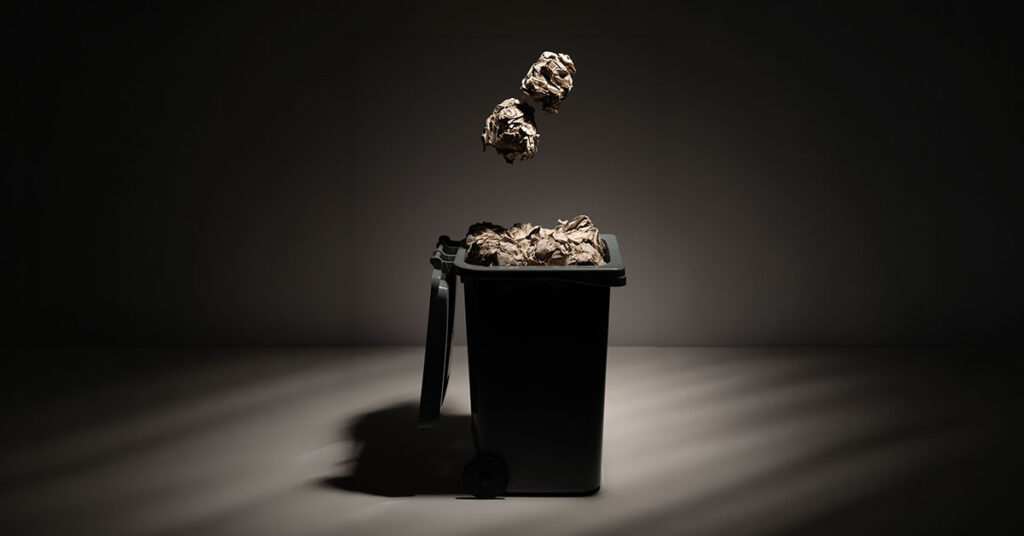

Can you imagine your house without a trash bin? I bet you won’t. Trash bins are part of our everyday life. We don’t think much about them, but they quietly play an important role in keeping our spaces clean and livable. They are vital for maintaining good health and environmental sustainability. Trash bins can teach us some valuable lessons in our lives. Here are a few life lessons we can draw from them.
The trash bin knows when to let go
Trash bins teach us that some things in life are meant to be discarded. We should learn to let go of emotional baggage, stress, pressure, and things that no longer serve us positively.
- Emptying and cleaning trash bins can be a humbling experience. It reminds us that we all have responsibilities, no matter our position. Whether we are leaders or workers, we all have something to take care of. This extends to our personal lives as well—taking responsibility for our actions and decisions. This is a serious matter. Most of the time, we don’t want to accept our flaws; instead, we try to hide them.
I remember someone I never met in person but have watched and learned from—Dr. A.P.J. Abdul Kalam, the former President of India. He once said, “A leader must take the failures and give the success to the team.” He shared an experience from his time at ISRO, where he was in charge of a mission. Despite all efforts, the rocket failed and fell into the sea. During the press conference, the mission director told him, “You don’t come, I will go and face the media.” Years later, when another launch was successful, the same director told him, “Now you go and face the press.” That is leadership. When the team fails, you take responsibility. When the team succeeds, you let them shine. A trash can reminds us of humility and leadership.
- The trash bin reminds us of the importance of having a place for everything. In life, when there is structure and order, there is less confusion. People who learn discipline and order often find themselves growing faster and living more peacefully. Sometimes, order is hard to achieve. But a trash can reminds us that without removing what is unnecessary, order cannot exist. You have to throw out what doesn’t belong before you can arrange what does.
“Not everything in life is meant to be held on to—some things are meant to be released.”
I struggle with this, and I’m sure many of you do too. Sometimes we decide to bring order into our lives, even in small things like eating habits, but the moment we attend a party or step into a different environment, we forget everything. Order is important in life, and it plays a big role in our growth.
- Trash bins are used for different types of waste. In the same way, life brings different kinds of situations. If we learn to adapt, we can handle life better. Life keeps changing, and we must learn to grow with it. I experienced this when I moved from India to the Philippines. Adapting to a new place is never easy. It takes time.
- Adapting means changing habits we’ve held for years. Sometimes, it means facing loneliness. But we also need to be careful. What are the things that are slowly pulling us away from our relationship with God? What are the things that are distancing us from our friends, both new and old? It is easy to forget people and move on, or even think highly of ourselves and leave behind meaningful relationships. Some things truly need to be adapted—but some things need to be trashed, and the hard part is knowing the difference.
Just as we remove trash from our homes, we must also learn to remove toxic influences from our lives. The people we surround ourselves with matter. It is healthy to step back sometimes and evaluate what we are allowing into our lives.
“You cannot build a clean life while holding on to clutter.”
Your heart needs emptying too
Sometimes, the least noticed things around us teach the greatest lessons. A simple trash bin is one of them. It quietly does its job every day, taking in what is unwanted and making space for what is clean and fresh. But let me tell you something more important. Just like a trash bin, our hearts also need cleaning. Many times, we hold on to things we should have thrown away long ago—anger, guilt, past mistakes, hurt from people, or even habits that we know are not good for us. We keep them inside, and slowly they begin to affect how we think, how we feel, and how we live.
God never designed us to carry all that. He invites us to let go. To give those burdens to Him.
My friend, learn to let go of what is weighing you down. Not everything deserves a place in your life. Not everything deserves your time, your energy, or your attention. Some things are simply meant to be thrown away. I have personally struggled with this in a friendship. We shared great memories and grew up together, but as time passed, life took us to different places. Slowly, the connection faded. Messages became formal, responses became rare, and the bond we once had no longer felt the same. I struggled with this for a long time, asking the Lord what I should do. Again and again, I felt impressed to let it go.
Relationships can turn toxic—not always in an obvious way, but in a way that slowly drains you. Letting go is not a sin. Sometimes, it is necessary. Sometimes, we need to “trash” certain things so that our focus becomes clearer and our path becomes stronger.
“A heavy heart is often a sign of things we were never meant to carry.”
So today, ask yourself honestly, what am I holding on to that I should let go? Give it to God and trust Him with it, then make space for something better. Because a clean heart always makes room for a better life.
This story is a thread in Needing to forgive
“Be ye kind one to another, tenderhearted, forgiving one another, even as God for Christ's sake hath forgiven you.”
Ephesians 4:32 · KJV
Still feeling this? Follow the thread