Sabbath School
Old Testament Prophets
Quarter 4, 2026
This week's lesson explores the world of Old Testament prophets — their very human emotions, their diverse roles, the inclusion of women among their number, and the ever-present danger of false prophets. Through stories like Elijah's despair, Micaiah's courage, and Deborah's leadership, the lesson paints a vivid picture of how God communicated with His people through flawed but willing messengers.
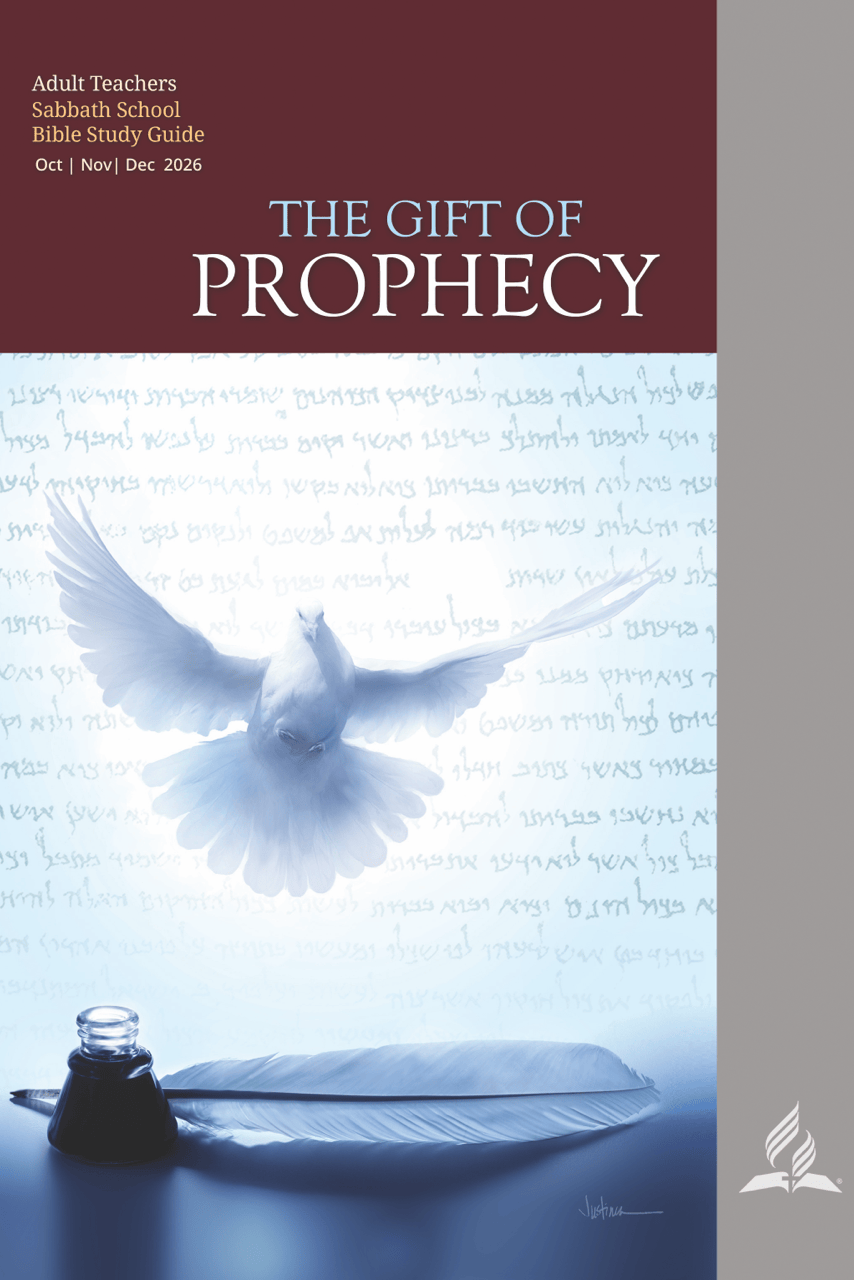
God does not choose perfect people to be His messengers — He chooses willing ones, and their very humanity is part of what makes their faithfulness so powerful.
Whoever you are
Whether or not you have ever opened a Bible, you have probably wondered whether there is anyone left who will tell you the truth when everyone else is telling you what you want to hear — and whether ordinary, struggling people can do something genuinely meaningful with their lives. That is exactly what this week's lesson is about. The prophets of the Old Testament were not superhuman figures; they were anxious, depressed, doubting men and women who said yes to a calling bigger than themselves, and their example speaks across centuries to anyone wrestling with the same questions today.
The week, day by day
Just as GPS guides physical travelers, the prophetic gift was God's guidance system for His people — helping them know where they were spiritually, where they were headed, and what dangers lay ahead.
Elijah called fire from heaven one day and begged God to take his life the next — James reminds us he was 'just like us,' which means God can work mightily through ordinary, emotionally fragile human beings.
Micaiah stood alone against 400 prophets telling the king what he wanted to hear — a true prophet's loyalty is to God's truth, not to royal approval or popular opinion, even when that costs them everything.
Prophets served as a vital check on both kings and priests — they were God's independent voice inside the power structures of Israel, willing to say what no one else dared say.
Scripture clearly records women like Miriam, Deborah, and Huldah as genuine prophets — called by God, active in leadership, and treated with the same accountability as their male counterparts.
False prophets in Jeremiah's day offered comfort and peace when the truth was judgment and warning — God's verdict was unambiguous: He had not sent them, and their words came from their own deceived hearts, not from Him.
Ellen White's own reluctance and fear when called to prophesy mirrors the anxiety felt by biblical prophets — being chosen by God has never meant feeling ready, only being willing to say yes.
In depth
This week's Sabbath School lesson takes us on a rich journey through the world of Old Testament prophets — who they were, how they functioned, what made them genuine, and why distinguishing true from false prophets mattered so deeply. The lesson opens with a disarmingly honest observation: these were not superhuman figures. James explicitly tells us that Elijah was a person 'of like nature with us' (). That phrase is worth sitting with. Here was a man who called down fire from heaven on Mount Carmel — one of the most dramatic miracles in all of Scripture — and yet within days he was huddled under a broom tree, begging God to let him die. The emotional crash that follows spiritual highs is a profoundly human experience, and the lesson doesn't sanitize it. God's response to Elijah's despair is itself instructive: He didn't lecture him. He fed him, let him sleep, and then asked gently, 'What are you doing here, Elijah?' The prophets were chosen not because they were emotionally bulletproof, but because they were willing — and God worked through their very human limitations.
The lesson moves naturally into the question of how to identify a true prophet, and here the story of Micaiah ben Imlah becomes the centerpiece. Four hundred prophets are telling King Ahab exactly what he wants to hear. Micaiah stands alone and tells the truth — and gets struck in the face for it. King Ahab's complaint — 'I hate him because he never prophesies anything good about me' — is one of Scripture's most revealing moments of self-indictment. The king has confused comfort with truth. This is the perennial temptation: we seek out voices that confirm what we already want to do. A true prophet's job was never to be a royal cheerleader. It was to faithfully transmit what God actually said, regardless of consequences. Micaiah's courage under coercion illustrates what the lesson describes as the defining characteristic of genuine prophets: accuracy, faithfulness, and honest transmission of God's message, even at personal cost.
One of the lesson's most important contributions is its treatment of women in the prophetic role. The Hebrew word nevi'ah (feminine form of navi, 'prophet') appears in the Old Testament without apology or qualification. Miriam is named alongside Moses and Aaron in as one sent by God to lead Israel. Deborah judged and prophesied simultaneously — an extraordinary double role. Huldah was consulted by King Josiah's officials when the Book of the Law was rediscovered in the temple, a remarkable moment in which the highest authorities in the land sought out a woman to authenticate Scripture. The lesson is careful to note that these women, like their male counterparts, were not morally perfect — Miriam's punishment for her attitude toward Moses' wife stands as evidence that God holds prophets accountable regardless of gender. What the lesson establishes clearly is that prophetic calling was not restricted by sex; God chose whom God chose.
The section on false prophets gives the whole lesson its most urgent edge. Jeremiah 14 describes a devastating drought and looming military disaster — and against Jeremiah's sober warnings, false prophets are assuring the people that everything will be fine. God's verdict is unsparing: 'I have not sent them, commanded them, nor spoken to them; they prophesy to you a false vision, divination, a worthless thing, and the deceit of their heart.' The source of their prophecy was themselves — or worse, the false gods they privately served. This is the danger of any spiritual tradition that allows comfortable voices to drown out uncomfortable truth. The lesson invites us to ask honestly: what criteria do we use to evaluate prophetic claims today? The Bible itself provides tests — fulfillment of predictions, consistency with Scripture, the fruit of the prophet's life — and these remain relevant wherever the gift of prophecy is claimed.
The Friday reading ties the entire week together beautifully by connecting Old Testament prophets with Ellen G. White's own experience. She was seventeen, shy, and physically fragile when she received her first visions. Her initial response — praying that the burden would be placed on someone else — echoes Jeremiah's own reluctance, Moses' protest that he was not eloquent, and Jonah's outright flight in the opposite direction. The pattern is consistent across centuries: God does not typically call the confident and the capable; He calls the willing and makes them capable. The lesson's title 'Not Perfect but Willing' is perhaps the most democratizing statement in the unit — because it suggests that the qualities God most prizes in a messenger are not talent or status but availability and trust.
The Lone Voice in the Council Chamber
The irony, as the lesson notes, is that Micaiah's message was the one that actually protected the people — had Ahab listened, the disaster at Ramoth Gilead could have been avoided. Truth spoken in love, even when painful, is ultimately an act of care. The lone voice is not always right, but when that voice is grounded in faithfulness to God's revealed word rather than self-interest, it deserves a hearing. Every generation has to decide whether it will listen to the voices that make it feel good, or the voices that help it see clearly.
Other voices
Knight observes that Adventism has always taken seriously the continuation of the prophetic gift beyond the biblical canon, which is precisely why the tests of a true prophet matter so much — not to make prophecy rare, but to keep it accountable to Scripture and to ethical integrity.
White's own account of her reluctance to accept the prophetic call — praying that the burden would fall on someone more capable — mirrors the anxiety of biblical prophets like Jeremiah, suggesting that genuine calling is often accompanied by a sense of personal inadequacy rather than self-confidence.
Paulien notes that the biblical prophets functioned primarily as covenant enforcers — calling Israel back to its relationship with God — rather than simply as predictors of the future, which helps explain why their messages were so often confrontational to those in power.
Take it with you
When you feel too weak, too ordinary, or too afraid to be used by God, remember that Elijah — fresh from one of the Bible's greatest miracles — collapsed under a tree and asked to die. God met him there with food, rest, and a gentle voice, not condemnation.
Develop a habit of testing the voices that claim to speak for God: Do they align with Scripture? Do they speak truth even when it is unwelcome? A message that only ever tells you what you want to hear deserves careful scrutiny.
Notice and honour the breadth of people God calls — different genders, personalities, and backgrounds. If God used a shy, sickly seventeen-year-old or a female judge leading an army, He is not limited by the categories we impose.
What is Sabbath School?
Sabbath School is part of Adventist worship, held before the main service each Saturday. Its purpose is simple: to read the Bible together and understand it better.
Each week has a topic, and the same lesson is studied worldwide. What makes it distinctive is how it is discussed — deliberately in small groups rather than one large gathering, so everyone present can take part. People share what they noticed, ask the questions they are actually carrying, and work through the passage together. Nobody is only listening.
The aim is not to arrive at a single answer but to send everyone away knowing the Bible a little better than they did that morning. You do not need to be Adventist to follow along, and you do not need to have read anything beforehand.
This overview was made to make the week’s Sabbath School reading clearer. It is based on the official Adult Bible Study Guide published by the General Conference of Seventh-day Adventists, and is meant to be read alongside the lesson, not in place of it.
The overview, its structure and its commentary were developed for the Christo Samuel Sabbath School app and this site. They are not to be copied, reproduced or republished elsewhere. If you spot an error, please let me know — I am always glad to correct it.
Lesson content © General Conference of Seventh-day Adventists · Adult Bible Study Guide. Overview and commentary © 2026 Christo Samuel.
The daily readings
The lesson itself, day by day, as published in the Adult Bible Study Guide. Tap any reference to read the passage.
Sab 10 Oct Old Testament Prophets
Read for This Week’s Study , ; ; ; ; ; .
Memory Text: “Jehoshaphat stood and said, ‘Hear me, O Judah and you inhabitants of Jerusalem: Believe in the Lord your God, and you shall be established; believe His prophets, and you shall prosper’ ” (, NKJV).
The Global Positioning System (GPS) helps travelers know where they are, where they are going, and even provides warnings against hazards. Spiritual travelers journeying to heaven also need guidance now and in the future from a heavenly “positioning system.” One way that God did this in times past was through the ministry of Old Testament prophets. In their narratives, counsels, prophecies, poetry, and songs, we discover a lot about the dozens of prophets who presented God’s messages to the people.
This week’s lesson explores Old Testament descriptions of prophets, descriptions that help us understand the gift of prophecy as it had been manifested by some of these servants of God.
As we will see, these were people like us, in that they were frail human beings subject to fear, anger, and discouragement. Life for them was not easy but filled with challenges and hardships, as it is for all of us.
What, then, can we learn from looking at a few of these specially called servants of God?
*Study this week’s lesson to prepare for Sabbath, October 17.
---
Selected Quotes from Ellen G. White
Born of the sons of Aaron, Ezra, in addition to his priestly training, had acquired a familiarity with the writings of the magicians, the astrologers, and the so-called wise men of the Medo-Persian realm. But he was not satisfied with his spiritual condition. He longed to be in full harmony with God: he longed for wisdom to carry out God’s will. And so he “prepared his heart to seek the law of the Lord, and to do it.” This led him to apply himself diligently to a study of the history of God’s people, as given in the writings of Old Testament prophets and kings. He was impressed by the Spirit of God to search the historical and poetical books of the Bible, to learn why the Lord had permitted Jerusalem to be destroyed, and His people to be carried captive into a heathen land. Ezra gave special study to the experiences of God’s chosen people, from the time the promise was made to Abraham, to the deliverance from Egyptian bondage and the exodus. He studied the instruction given them at the foot of Mount Sinai, and throughout the long period of the wilderness-wandering. As he learned more and still more concerning God’s dealings with His children, and began to realize how sacred was the law given at Sinai, Ezra’s heart was stirred as never before. He experienced a new and thorough conversion, and determined to master the records of Old Testament history, that he might use this knowledge, not for selfish purposes, but to bring blessing and light to his people. Some of the prophecies were about to be fulfilled; he would search diligently for the light that had been obscured. Ezra took pains with his studies. He endeavored to gain a heart-preparation for the work he believed was appointed him. He sought God earnestly, that he might be a workman of whom his Lord would not be ashamed. He searched out the words that had been written concerning the duties of God’s denominated people; and he found the solemn pledge made by the Israelites, that they would obey the words of the Lord; and the pledge that God, in return, had made, promising them His blessing as a reward of obedience.—To Be Like Jesus, p. 118.
The Old Testament sheds light upon the New, and the New upon the Old. Each is a revelation of the glory of God in Christ. Christ as manifested to the patriarchs, as symbolized in the sacrificial service, as portrayed in the law, and as revealed by the prophets is the riches of the Old Testament. Christ in His life, His death, and His resurrection; Christ as He is manifested by the Holy Spirit, is the treasure of the New. Both Old and New present truths that will continually reveal new depths of meaning to the earnest seeker (Counsels to Parents, Teachers, and Students, 462, 463).
Christ reproached His disciples with their slowness of comprehension. . . . After His resurrection, as He was walking to Emmaus with two of the disciples, He opened their understanding, that they might comprehend the Scriptures, so explaining the Old Testament to them that they saw in its teachings a meaning that the writers themselves had not seen.—Lift Him Up, p. 115.
Sun 11 Oct The Humanity of Prophets
As we saw last week, the Lord used Elijah the prophet to do a tremendous work in Israel, despite fervent opposition. What the Lord had accomplished through him was incredible. And yet . . . what?
Reflect on how James presents Elijah the prophet in , . What might he mean by saying that Elijah had “a nature like ours” (NKJV)?
Elijah had a stunning success on Mount Carmel (1 Kings 18); God had worked in a mighty way through him, and one of the most astonishing miracles depicted in Old Testament history occurred: at the sound of Elijah’s own words, fire literally came down from heaven ()! You would have thought that this man of God would have been exceedingly happy after something like that.
Read . What does this tell us about the emotional state of God’s prophet?
“ ‘It is enough! Now, Lord, take my life, for I am no better than my fathers!’ ” (, NKJV). This sounds like a man suffering from some form of depression. Why? What happened on Mount Carmel would not be an easy act to follow, for sure, but, still, something else is going on here.
Perhaps the key could be found in his words, “ ‘I have been very zealous for the Lord God of hosts; for the children of Israel have forsaken Your covenant, torn down Your altars, and killed Your prophets with the sword. I alone am left; and they seek to take my life’ ” (, NKJV). This sounds as though he’s lamenting what he believes to be his failures in ministry. Apostasy remains, despite his best efforts, as if he alone could have stemmed the tide. Whatever ultimately is going on here, we can see the humanity and fragility of this man of God. In other words, Elijah was a man who had “a nature like ours.”
Why might it be easy at times to have a sense of “failure” in your own life or endeavors? What Bible promises can you claim to help you work through discouragement?
---
Selected Quotes from Ellen G. White
It would seem that after showing courage so undaunted, after triumphing so completely over king and priests and people, Elijah could never afterward have given way to despondency nor been awed into timidity. But he who had been blessed with so many evidences of God’s loving care was not above the frailties of mankind, and in this dark hour his faith and courage forsook him. . . . Had he remained where he was, had he made God his refuge and strength, standing steadfast for the truth, he would have been shielded from harm. The Lord would have given him another signal victory by sending His judgments on Jezebel. . . . Into the experience of all there come times of keen disappointment and utter discouragement—days when sorrow is the portion, and it is hard to believe that God is still the kind benefactor of His earthborn children; days when troubles harass the soul, till death seems preferable to life. It is then that many lose their hold on God. . . . Could we at such times discern with spiritual insight the meaning of God’s providences we should see angels seeking to save us from ourselves, striving to plant our feet upon a foundation more firm than the everlasting hills, and new faith, new life, would spring into being. . . . For the disheartened there is a sure remedy—faith, prayer, work. Faith and activity will impart assurance and satisfaction that will increase day by day. . . . In the darkest days, when appearances seem most forbidding, fear not. Have faith in God. He knows your need. He has all power. His infinite love and compassion never weary. . . . And He will bestow upon His faithful servants the measure of efficiency that their need demands. . . . Did God forsake Elijah in his hour of trial? Oh, no! He loved His servant no less when Elijah felt himself forsaken of God and man than when, in answer to his prayer, fire flashed from heaven and illuminated the mountaintop.—Conflict and Courage, p. 213.
Elijah’s retreat on Mount Horeb, though hidden from man, was known to God; and the weary and discouraged prophet was not left to struggle alone with the powers of darkness that were pressing upon him. . . . God met His tried servant with the inquiry, “What doest thou here, Elijah?” I sent you to the brook Cherith and afterward to the widow of Sarepta. I commissioned you to return to Israel and to stand before the idolatrous priests on Carmel, and I girded you with strength to guide the chariot of the king to the gate of Jezreel. But who sent you on this hasty flight into the wilderness? What errand have you here? . . . Much depends on the unceasing activity of those who are true and loyal, and for this reason Satan puts forth every possible effort to thwart the divine purpose to be wrought out through the obedient. He causes some to lose sight of their high and holy mission, and to become satisfied with the pleasures of this life. . . . Others he causes to flee in discouragement from duty, because of opposition or persecution. . . . To every child of God whose voice the enemy of souls has succeeded in silencing, the question is addressed, “What doest thou here?” I commissioned you to go into all the world and preach the gospel, to prepare a people for the day of God. Why are you here?—Conflict and Courage, p. 214.
Mon 12 Oct Identifying True Prophets
In the early history of Israel, there is evidence of false prophets (). God, therefore, did not leave His people without guidance on who His true prophets were.
As recipients of God’s revelation and inspiration, true prophets faithfully, accurately, and honestly transmitted God’s messages, even if, at times, this made them unpopular with the people in power.
Read . What does it tell us about how faithful prophets operate?
To have a king say of a prophet that “ ‘I hate him, because he does not prophesy good concerning me, but evil’ ” (, NKJV) says a lot about the king, but more about the prophet. He was, obviously, a man not afraid to speak the truth, even to the king himself—not a way to win royal favor, to say the least.
Micaiah stood alone against 400 false prophets as he presented the truth revealed to him. In the face of coercion to alter negative messages from the Lord to placate evil King Ahab and his wife, Jezebel (, ), Micaiah presented God’s truth, regardless of how it might be received.
Read . What do these verses tell us about how others viewed faithful prophets of God?
There are numerous examples of the quality of life lived by prophets in the Bible. In this case, Saul was sent by his father, Kish, to look for his lost donkeys. The servant traveling with Saul suggested that he not abandon the search, because there was “ ‘in this city a man of God, and he is an honorable man’ ” (, NKJV). The description given here of Samuel the prophet depicts the qualities expected of God’s prophets. True prophets in Scripture are identified as “men of God,” chosen in part to exemplify His character. At the same time, just because some among the “men of God” may be prophets, this doesn’t make them flawless human beings.
Who, even among the most esteemed “men of God,” have you known to be flawless?
---
Selected Quotes from Ellen G. White
God’s servants are to work for the higher classes, but this does not mean that they are to bind themselves up with the honored of the earth, depending on them for strength, influence, and success. The Lord will often incline the hearts of those in positions of responsibility to grant favors to His commandment-keeping people. But when God’s servants leave Him to solicit recognition from men of the world, they exchange power for weakness. We have a most solemn work before us, the importance of which we can only understand by the light which is shining from God’s Word on the past and the present. Who is holding fast the faith once delivered to the saints? Who, amid the cries of “Lo here” and “Lo there,” is showing unshaken confidence in the Word of God? The faith of the present connects us with the past and points us to the future. We may learn valuable lessons from the experience of the prophet Elisha. Elisha was chosen by the Lord as Elijah’s helper, and through test and trial he proved himself true to his trust. He was willing to be and do anything the Lord directed. He did not seek to shun the humblest service, but was as faithful in the performance of smaller duties as of larger responsibilities. He was always willing to serve in any position to which the Lord pointed him, however disagreeable it might be to his natural inclinations. And at every step he learned lessons of humility and service. . . . “And it came to pass, when they were gone over, that Elijah said unto Elisha, Ask what I shall do for thee, before I be taken away from thee. And Elisha said, I pray thee, let a double portion of thy spirit be upon me” (). He did not ask for worldly honor, for a high place among the great men of the earth. That for which he craved was a double portion of the Spirit given to the one God was about to honor with translation. He knew that nothing but a double portion of the Spirit that had rested on Elijah could fit him to fill the place Elijah had filled, because Elijah had the experience and wisdom of age, which cannot by any method be imparted to the young. . . . Had you been asked this question, what would you have answered? What is the greatest desire of your heart as you engage in the service of God?—The Upward Look, p. 331.
Tue 13 Oct Functions of Prophets
Read and . How did prophets function in relation to kings and priests?
Prophets interacted with kings in both pleasant and unpleasant situations. When the Israelites demanded a king (), they said we want “a king to judge us like all the nations” (). What a sad but powerful example of the danger that God’s people have faced in every age: the desire to be like those around them. In this case, they had no idea what this request would bring, even though they were forewarned () by God through His prophet. Based on their desires, and despite his warning to them, Samuel soon anointed Israel’s first king, known in biblical history as King Saul.
The Old Testament books of 1 and 2 Kings and 1 and 2 Chronicles record the kind and quality of rulership exhibited by the kings of Israel and Judah. Sacred history shows that the kings who did evil far outnumbered those who did good in the sight of God. One of the core functions of the prophets was to help lead unfaithful kings back to obedience to God’s law. As a result, these prophets faced threats, with some even harmed and killed by kings who led God’s people away from Him (, ).
Prophets also interacted with priests. Moses, a prophet of God, anointed Aaron and his sons as the first Israelite priests (). There were times priests received words of rebuke from God through the prophets (, ). One striking example of this is the entire household of Eli, who were confronted for their corrupt practices (). These were some very strong rebukes against rampant corruption among people given special privileges.
Prophets were teachers of the people (2 Chronicles 34). They presented messages from God to the priests, kings, and the nation (, ). Prophets also spoke to surrounding nations outlining God’s plan for them, a theme repeated several times in the messages of the Old Testament prophets (; , ). Prophets were expected not only to pass on faithfully the messages God gave them but were sometimes instructed to write them down and preserve them (). Again, no matter how human the prophets were (and with all the attending frailties that go with that), they were men and women of prayer, the Word, and service to God and His people (; ).
---
Selected Quotes from Ellen G. White
Elijah had thought that he alone in Israel was a worshiper of the true God. But He who reads the hearts of all revealed to the prophet that there were many others who, through the long years of apostasy, had remained true to Him. . . . From Elijah’s experience during those days of discouragement and apparent defeat there are many lessons to be drawn, lessons invaluable to the servants of God in this age, marked as it is by general departure from right. The apostasy prevailing today is similar to that which in the prophet’s day overspread Israel. In the exaltation of the human above the divine, in the praise of popular leaders, in the worship of mammon, and in the placing of the teachings of science above the truths of revelation, multitudes today are following after Baal. Doubt and unbelief are exercising their baleful influence over mind and heart, and many are substituting for the oracles of God the theories of men. It is publicly taught that we have reached a time when human reason should be exalted above the teachings of the Word. The law of God, the divine standard of righteousness, is declared to be of no effect. The enemy of all truth is working with deceptive power to cause men and women to place human institutions where God should be, and to forget that which was ordained for the happiness and salvation of mankind. Yet this apostasy, widespread as it has come to be, is not universal. Not all in the world are lawless and sinful; not all have taken sides with the enemy. God has many. . . who are hoping against hope that Jesus will come soon to end the reign of sin and death. . . . These need the personal help of those who have learned to know God and the power of His word. . . . As those who have an understanding of Bible truth try to seek out the men and women who are longing for light, angels of God will attend them. . . . Many will cease to pay homage to man-made institutions and will take their stand fearlessly on the side of God and His law.—Conflict and Courage, p. 215.
Nathan the prophet was bidden to bear a message of reproof to David. It was a message terrible in its severity. To few sovereigns could such a reproof be given but at the price of certain death to the reprover. Nathan delivered the divine sentence unflinchingly, yet with such heaven-born wisdom as to engage the sympathies of the king, to arouse his conscience, and to call from his lips the sentence of death upon himself. . . . This experience was most painful to David, but it was most beneficial. But for the mirror which Nathan held up before him, in which he so clearly recognized his own likeness, he would have gone on unconvicted of his heinous sin, and would have been ruined. The conviction of his guilt was the saving of his soul. He saw himself in another light, as the Lord saw him, and as long as he lived he repented of his sin.—Conflict and Courage, p. 179.
Wed 14 Oct Women Prophets
Read , , , and . What do these texts also teach about the prophetic role?
There is abundant evidence in Scripture that God called women to be prophets. (See the use of the Hebrew word nevi'ah [] and the Greek word prophētis [].) In , Miriam is listed with Moses and Aaron as those sent to the people. Miriam is presented as a prophetess who sang a song of victory when the Israelites crossed the Red Sea (, ). Yet, this prophetess, like her male counterparts, was not without fault, as her shameful attitude toward Moses and his Ethiopian wife reveal, actions for which the prophetess had been duly punished (see ).
We can see the work of another prophet in the story of Deborah, who served as a judge in Israel ().
In fact, there is clear evidence that Deborah () received revelation from God (, ). Her song of victory () is an acknowledgment of God’s intervention and had deep theological significance for the nation at that time in history.
Read . Why did King Josiah’s men go to Huldah? What should this tell us about her important role in the nation?
Huldah “the prophetess” was consulted by the top men of King Josiah’s council (, ) after they read the words of the “Book of the Law” (, NKJV) (believed to be Deuteronomy) to the king, who, in response, “tore his clothes” (, NKJV). This was obviously a very serious matter, and the king took it that way, which is why his men went right to Huldah. She had received a message from God regarding the impending judgment of Judah. Josiah’s reforms resulted from Huldah’s prophetic messages and averted God’s judgment on His people.
Men prophets and women prophets, though called of God, were also sinners in need of grace. What hope can you take from their stories?
---
Selected Quotes from Ellen G. White
None of the apostles and prophets ever claimed to be without sin. Men and women who have lived the nearest to God, who would sacrifice life itself rather than knowingly commit a wrong act, whom God has honored with divine light and power, have confessed the sinfulness of their nature. They have put no confidence in the flesh, have claimed no righteousness of their own, but have trusted wholly in the righteousness of Christ. So will it be with all who behold Christ. The nearer we come to Jesus, and the more clearly we discern the purity of His character, the more clearly shall we see the exceeding sinfulness of sin, and the less shall we feel like exalting ourselves. There will be a continual reaching out of the soul after God, a continual, earnest, heartbreaking confession of sin and humbling of the heart before Him. At every advance step in our Christian experience our repentance will deepen. We shall know that our sufficiency is in Christ alone and shall make the apostle’s confession our own: “I know that in me (that is, in my flesh,) dwelleth no good thing.” “God forbid that I should glory, save in the cross of our Lord Jesus Christ, by whom the world is crucified unto me, and I unto the world.” (; .)—The Acts of the Apostles, p. 561.
Josiah, from his earliest manhood, had endeavored to take advantage of his position as king to exalt the principles of God’s holy law. And now, while Shaphan the scribe was reading to him out of the book of the law, the king discerned in this volume a treasure of knowledge, a powerful ally, in the work of reform he so much desired to see wrought in the land. He resolved to walk in the light of its counsels, and also to do all in his power to acquaint his people with its teachings, and to lead them, if possible, to cultivate reverence and love for the law of heaven. But was it possible to bring about the needed reform? From all that he could learn from the reading of the volume before him, Israel had almost reached the limit of divine forbearance; soon God would arise to punish those who had brought dishonor upon His name. Already the anger of the Lord was kindled against the people. Overwhelmed with sorrow and dismay, Josiah rent his garments, and bowed before God in agony of spirit, seeking pardon for the sins of an impenitent nation. At that time the prophetess Huldah was living in Jerusalem, near the Temple. The mind of the king, filled with anxious foreboding, reverted to her; and he determined to inquire of the Lord through this chosen messenger, to learn, if possible, whether by any means within his power he might save erring Judah, now on the verge of ruin. The gravity of the situation, and the respect in which he held the prophetess, led him to choose as his messengers to her the first men of the kingdom. “Go ye,” he bade them, “inquire of the Lord for me, and for the people, and for all Judah, concerning the words of this book that is found: for great is the wrath of the Lord that is kindled against us, because our fathers have not hearkened unto the words of this book, to do according unto all that which is written concerning us.”—Ye Shall Receive Power, p. 268.
Thu 15 Oct False Prophets
No matter what God does, Satan has his counterfeits. It’s the same with prophets. Israel faced true and false prophets. The key was to know the difference.
Read . What was happening here, and how did the Lord regard those who spoke falsely as “prophets” in His name?
In Jeremiah 14, God gave Jeremiah a message of judgment for Judah, a judgment that would come in the form of a sword (war), famine, and pestilence. False prophets at the time contradicted Jeremiah’s message. Jeremiah describes them in very clear terms: “And the Lord said to me, ‘The prophets prophesy lies in My name. I have not sent them, commanded them, nor spoken to them; they prophesy to you a false vision, divination, a worthless thing, and the deceit of their heart’ ” (, NKJV).
False prophets are corrupt because their source of prophetic claims is often the false “gods” whom they worship (, ). God warns, “ ‘I have not sent them, commanded them, nor spoken to them’ ” (, NKJV). They are “ ‘prophets of the deceit of their own heart’ ” (, NKJV). Ezekiel was instructed to prophesy against “ ‘the prophets . . . who prophesy out of their own heart’ ” (, NKJV).
False prophets often follow popular views. This was the case in 1 Kings 22, when a group of 400 “prophets” gathered at the command of King Ahab (). With one voice they advised the king to fight against Ramoth-Gilead. Ahab counseled with Jehoshaphat, king of Judah, after they heard the prophetic counsel from the prophets of Asherah. Jehoshaphat urged Ahab to consult the prophet Micaiah as to whether they should go to battle or not. “Then the messenger who had gone to call Micaiah spoke to him, saying, ‘Now listen, the words of the prophets with one accord encourage the king. Please, let your word be like the word of one of them, and speak encouragement’ ” (, NKJV).
The pressure Micaiah experienced to lie was likely the same pressure felt by the false prophets of Asherah, but Micaiah did not follow this popular view; instead, he waited for God to tell him what to say ().
Whether or not you are a prophet, it’s always easy to follow the popular thing. Considering how corrupt culture can be, why is this never a good idea?
---
Selected Quotes from Ellen G. White
How shall we distinguish God’s true servants from the false prophets who Christ said should arise to deceive many? There is only one test of character—the law of Jehovah. The Israelites placed over their doors a signature of blood to show that they were God’s property. So the children of God in this age will bear the signature God has appointed. They will place themselves in harmony with God’s holy law. A mark is placed upon every one of God’s people just as verily as a mark was placed over the doors of the Hebrew dwellings, to preserve the people from the general ruin. God declares, “I gave them my sabbaths, to be a sign between me and them” (). . . . There is no need for us to be deceived. . . . Satanic agencies have made the earth a stage for horrors which no language can describe. War and bloodshed are carried on by nations claiming to be Christian. A disregard for the law of God has brought its sure result. The great conflict now being waged is not merely a strife of man against man. On one side stands the Prince of life, acting as man’s substitute and surety; on the other, the prince of darkness, with the fallen angels under his command. . . . There will be a sharp conflict between those who are loyal to God and those who cast scorn upon His law. The church has joined hands with the world. Reverence to God’s law has been subverted. The religious leaders are teaching for doctrine the commandments of men. As it was in the days of Noah, so it is in this age of the world. But shall the prevalence of disloyalty and transgression cause those who have reverenced the law of God to have less respect for it, to unite with the powers of earth to make it void? The truly loyal will not be carried away by the current of evil. They will not throw scorn and contempt on that which God has set apart as holy. The test comes to every one. There are only two sides. On which side are you?—That I May Know Him, p. 211.
The voice of God is speaking to us through His Word, and there are many voices that we will hear; but Christ has said we should beware of them who will say, Here is Christ or there is Christ. Then how shall we know that they have not the truth, unless we bring everything to the Scriptures? Christ has warned us to beware of false prophets who will come to us in His name, saying that they are Christ. . . . The time is coming when Satan will work miracles right in your sight, claiming that he is Christ; and if your feet are not firmly established upon the truth of God, then you will be led away from your foundation. The only safety for you is to search for the truth as for hid treasures. Dig for the truth as you would for treasures in the earth, and present the Word of God, the Bible, before your heavenly Father, and say, Enlighten me; teach me what is truth. And when His Holy Spirit shall come into your hearts, to impress the truth into your souls, you will not let it go easily.—To Be Like Jesus, p. 117.
Fri 16 Oct Not Perfect but Willing
As we have seen, the lives of Old Testament prophets make clear that it has never been easy to be God’s messenger. Ellen G. White experienced the same anxieties that biblical prophets felt. As we learned last Friday, she was young, shy, and in poor health when she received God’s call. While a second vision confirmed her call, Ellen Harmon (White) remained apprehensive about God’s call, writing:
“About one week after this the Lord gave me another view, and showed me the trials I must pass through; that I must go and relate to others what he had revealed to me; that I should meet with great opposition, and suffer anguish of spirit. . . .
This vision troubled me exceedingly. My health was very poor, and I was only seventeen years old. . . . I earnestly prayed that the burden might be laid on some other one. But all the light I could get was, ‘Make known to others what I have revealed to you.’ I was unreconciled to go out into the world. I had naturally but little confidence. . . . I looked with desire into the grave. Death appeared to me preferable to the responsibilities I should have to bear.”—Spiritual Gifts, vol. 2, pp. 35, 36.
Did you notice that Ellen Harmon (White) would rather die than to accept her call? After much prayer and encouragement by fellow believers, she acquiesced and devoted the remainder of her life to following “[H]is bidding.”—Ellen G. White, Spiritual Gifts, vol. 2, p. 38.
She would become the most influential voice to—and even of—the future Seventh-day Adventist Church. Nevertheless, Ellen Harmon (White) was human and had her own personal faults and physical trials, family challenges, and interpersonal struggles. Yet amid her humanity, we see a great lesson: God chooses imperfect people who are willing to serve Him.
Under the guidance of the Holy Spirit, Ellen G. White’s prophetic ministry would encourage believers and connect them to Bible truths. By 1860, she had played a leading role in the development of the fledgling Seventh-day Adventist denomination and its mission to proclaim the three angels’ messages to the world. God would lead these believers to organize the Seventh-day Adventist Church in 1863. In later decades, Ellen G. White’s prophetic voice was influential in establishing the global Adventist health and educational systems. However, the most important contribution of her ministry is her writings, totaling approximately 100,000 pages. Ellen G. White’s inspired writings continue to speak throughout the world today.
Click here for Further Study 🔗.
---
Selected Quotes from Ellen G. White
Christ Triumphant, “Learning to Lead Through Serving,” June 8, p. 166. The Faith I Live By, “The Gifts of the Spirit,” October 13, p. 292.
Lesson content © General Conference of Seventh-day Adventists · Adult Bible Study Guide.
Carry it with you
Everything here, plus the parts that only work when they are yours.
- Highlight and save any verse
- Write your own notes on every chapter
- Search by how you feel, not just by word
- A daily reading that keeps your place
Get the app
Free on both stores. Pick yours.